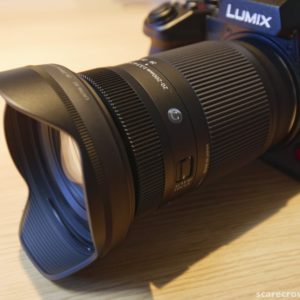
You can’t fight a crying child or material desires. I tried putting up a futile resistance, complaining about how heavy it was and how expensive it was, but in the end, I welcomed the LUMIX S1IIE.
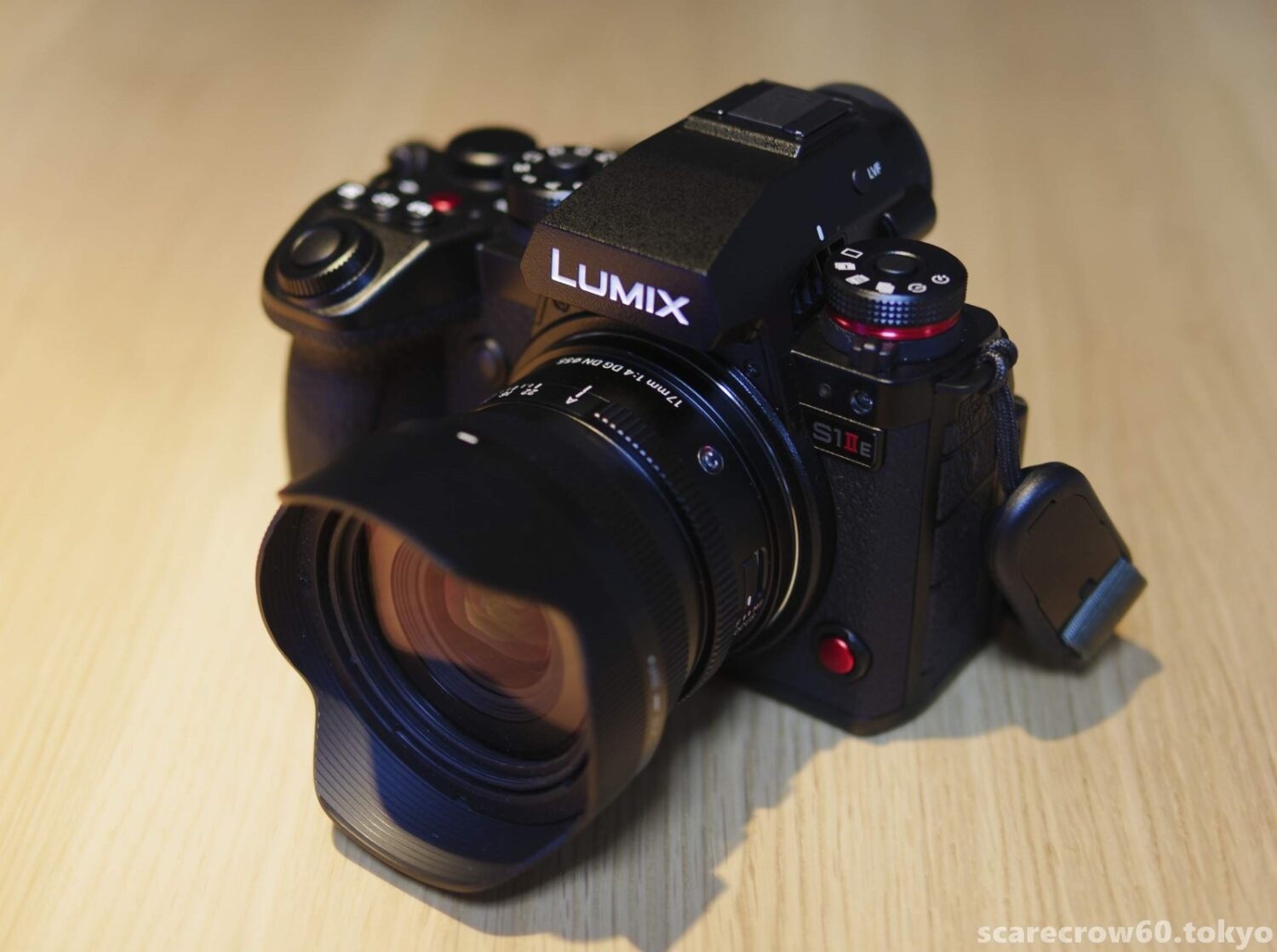
Here it is.
I attached the compact SIGMA 17mm F4 DG DN to make photography easier. While it’s the entry-level model in the 2nd generation LUMIX S1 series—the “plum” in the plum-bamboo-pine hierarchy—it boasts a flagship-worthy appearance indistinguishable from the higher-end models.
Bringing this one home involved not only emotional struggles but also financial twists and turns. In exchange, not only my S5 but many other cameras & lenses became stars in the sky over Shinjuku. But that’s all in the past now. I won’t dwell on it.
So, what sets the S1IIE apart from the S5? Since spec and performance comparisons have already been covered extensively in media and on social networks, I’ll just jot down the points that resonated with me as a personal memo.
1. On-sensor phase detection AF: I’ve already used this on the MFT G9proII, and honestly, I don’t think “the on-sensor phase detection made LUMIX’s AF incredibly good.” However, compared to before (when it was contrast AF only), I feel there are fewer instances of it hesitating or completely missing focus (especially in low light, where the benefit seems significant). I’m looking forward to seeing how much it’s been refined in this model.
2. Enhanced Image Stabilization: 5 stops → 8 stops. LUMIX’s image stabilization was already powerful, but this added peace of mind is significant even for someone like me who rarely shoots video.
3. Improved Viewfinder Performance: 0.39-inch (2.36 million dots) → 0.5-inch (5.76 million dots). The viewfinder’s “visibility” directly impacts shooting comfort, so this is important.
4. Real-time LUT Function: When I first saw this on the G9proII, it didn’t quite click. But recently, I’ve come to appreciate the feeling of boldly enjoying color grading that goes beyond the “proper” look of the standard photo styles. I’m grateful to LUMIX for providing official LUTs, making it easy for beginners to enjoy with confidence.
5. Improved Usability: Shutter closes when power is off, joystick now 8-directional instead of 4-directional… These small details really make a huge difference in usability. Seriously.
After handling the actual unit briefly, I was relieved to find points 1 through 5 all met my expectations.
Beyond that, there were two additional “nice surprises” not apparent from the spec sheet alone.
1) After turning on the power switch, the camera booted up at supersonic speed! For someone used to the sluggish S5, this is quite the jolt.
2) Customizing the Fn button layout allowed me to match the exact configuration of my G9proII, which I use in parallel! With the S5, I could only get it “roughly similar,” but this time it’s “exactly the same” – super satisfying.
Now, as you probably already know, I’m almost 100% a stills-focused photography enthusiast, so right now I don’t have the expertise to talk about how great the S1IIE is as a video camera. Having recently tried a “Video Basics” workshop for the first time, I hope to become a bit more of a “discerning guy” who can appreciate how the S1IIE and G9proII excel as hybrid still/video cameras.
Anyway, I can’t wait to take the S1IIE out on the town. Hopefully the autumn rains will clear up by next weekend.