I was getting tired of saying, “It’s still too hot to go out shooting…” So, one weekend in early September, I finally took the plunge and went out to Ueno with my Lumix G9PROII. It was the first time for me to take a test shot.
The lens I attached to the G9PROII that day was the Leica DG 12-60mm F2.8-4, a versatile standard zoom lens from Pana-Leica that covers a wide zoom range of 24-120mm (35mm equivalent).
It is difficult to take bokeh-oriented pictures with a lens of this brightness on an MFT mount, but since this was a “test shot,” I forced the entrance to the Ueno Zoo into the background and took one blurry shot.
I have used the same lens with the GX7II and G99, so I had a pretty good idea of what the picture would be like, but my first impression is that the G9PRII has a lot more dynamic range. It’s just about as close as you can get without any white out (right?). I was actually very happy with the camera settings for my first shot.
Actually, I made a big mistake in setting up the camera for my important first shot. I realized it when I got home, so there was nothing I could do. I am a RAW photographer, but this time I used “JPG only” for shooting. Oops, I’ve messed up.
I have a bad habit of shooting in RAW and then taking my time to adjust the tonal gradations and colors during the development process, so when I shoot, I tend to release the shutter with a “rough idea” of the exposure compensation and photo style selection. Even if I see blacks and whites in a high-contrast scene, I usually just shoot the scene as it is, thinking that I can work it out later if I have RAW data with a large amount of room for adjustment.
Fortunately, the photo↑ was not too badly damaged, but the main reason why I took so many failed photos was that I did not notice the “forced JPG output” setting and took all the photos roughly in this way. I’ve done it.
It can’t be helped. I’ll take it as a good thing to try out the camera. Giving up is the key.
This is the reason why I went to Ueno this time. The “Geisai,” a school festival of Tokyo University of the Arts.
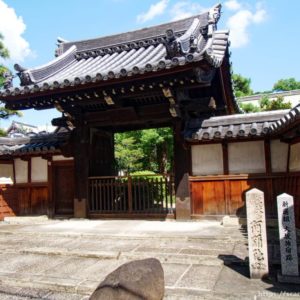
I remember going last year for the first time in a long time and having a great time, so I thought I would do it again this year, but the crowds and the heat were too much for me. I remember how crowded and hot it was last year when I arrived at the site. The above photo of the school gate at the top shows the heat of the lingering summer heat, which is not so bad.
Although it was not comfortable to walk around in the heat, I was pleasantly surprised that the AF of the G9PROII was very fast.
One of the specialties of this university festival is the original portable shrines made by the students. This year, too, there were many masterpieces.
All of the portable shrines were magnificent, but the “baku” (tapir), the portable shrine next to the “Enma” (King Enma) at the very front, is a big white blur. The whiteness of the sky is also questionable. I am ashamed of my messy work.
My shooting style is not so good, but G9PROII is doing its job as best as it can. In fact, the shadows around the darkened face of “King Enma” were lifted a little using PhotoLab (for JPG data), but I was able to capture the nuances of the image with a lot of effort, even in the areas that looked blacked out. I think my impression that the camera’s wide dynamic range is something to behold is not mistaken.
King Enma is full of power. It is so scary that even children start to cry.
The power of this. The original statue (amazingly, the material is styrofoam!) ) is a great piece of work, but the sharpness of the photo is also quite impressive.
Now, let’s look at my camera,
The G9PROII, my other regular camera Lumix S5, and the S5II are, as you know, triplets, almost indistinguishable from a distance thanks to Lumix’s bold decision to save molding costs. It is natural to criticize that a body of the same size as a full-size camera is disproportionately large for an MFT mount with half the sensor size, and I think this is true.
However, it is also true that the advantage of having the same type of body is that the control settings can be almost the same. In using the G9PROII for the first time, I had no stress at all in terms of operation. I would like to say out loud that this is a notable advantage for S5 and S5II users.
I would also like to add, in a small voice, a mature negative comment that it is too much the same and lacks the uplifting feeling of “using a new camera”.
The festival is a great opportunity for the music department to enjoy performances by top-class amateur (and some professional) student performers free of charge. I was not invited on the day of the event, so I was forced to visit the exhibition of works by the Fine Arts Department.
Although I am not an art aficionado, there were a few artworks that struck a chord with me that day, so I will talk about them in my next entry.