It’s hot, after all. So hot, you know.
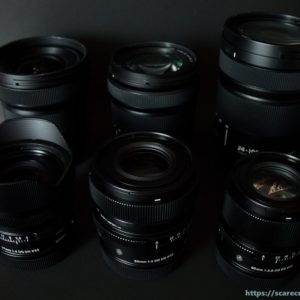
I’ve acquired a new lens and my desire to take pictures has been growing, but the heat has easily broken my enthusiasm. I’ve decided to spend this and the next article in an air-conditioned room to pass the time.
Since I started using PhotoLab7 as a RAW development tool, I became a little curious about two tools released by DxO, so I installed the trial version and tried them for a while. This time I will talk about FilmPack7 and the next time Nik Collection7.

In short, FilmPack is a tool for processing digital photos to look like film photos (silver halide photos). However, since DxO is an expert in image data analysis, it is more than just “making it look like a film photo”. It can easily reproduce the effects of film development for 40 types of black-and-white film and 49 types of color positive and negative film, with 104 presets, and you can add your own recipes by arranging them to your liking.
Even though I have almost no knowledge of film-based photography, it is irresistibly fun for me to simply let the software do the work and look at the different tastes of old and new films. I can look at them as long as I want. Let me give you some examples for fun.
A photo of Kabutocho taken with the Lumix S5. The photo on the left of the slider is the “original photo,” so to speak, which I finished with PhotoLab7 using “DCP profile created by Adobe to resemble LUMIX S5’s photo style ‘Landscape’ (complicated)”, and the photo on the right is the “Fujifilm Velvia 50” emulation photo by FilmPack7.


Next, on the left is an “original” and on the right is a “Kodak Elite Extracolor 100” emulation by FilmPack7.

It is interesting to see the subtle change in seasoning. Although it is almost impossible to tell from the size of the blog screen, the film photo emulation attempts to reproduce not only color and contrast, but also sharpness adjustments that make the photo look old-fashioned, as well as the graininess that only physical development using chemicals and photographic paper can achieve.
When it comes to black-and-white photography, the number of films with unique tastes increases and becomes even more interesting. On the left is Kodak “Tri-X400”, a standard among standard films, and on the right is “Rollie Retro 80’s”, which, contrary to its name, stands out for its modern high contrast.


Also on the left is the “Kodak Tri-X400” and on the right is the “Agfa APX 25” which is characterized by its fine grain.

I am not so much interested in what kind of effects can be obtained by tuning the software, but simply looking at the resulting photos (i.e., the emulation results of each brand’s film development) is enough to keep me occupied. It’s a great way to pass the time.
Since it can be used as a plug-in of PhotoLab7, it is very easy to select a preset when developing RAW files.
What should I do if I get seriously involved in the history of silver halide photography or film photography and fall into the swamp from here… Well, as a long life hobby, I guess that would be fun, too. Unless I go in the direction of actually taking silver halide photographs, it will cost me almost nothing… Don’t go that way, me.
So, my thoughts have gone here and there, but I have come to understand that FilmPack7 is quite fun to use as a plaything.